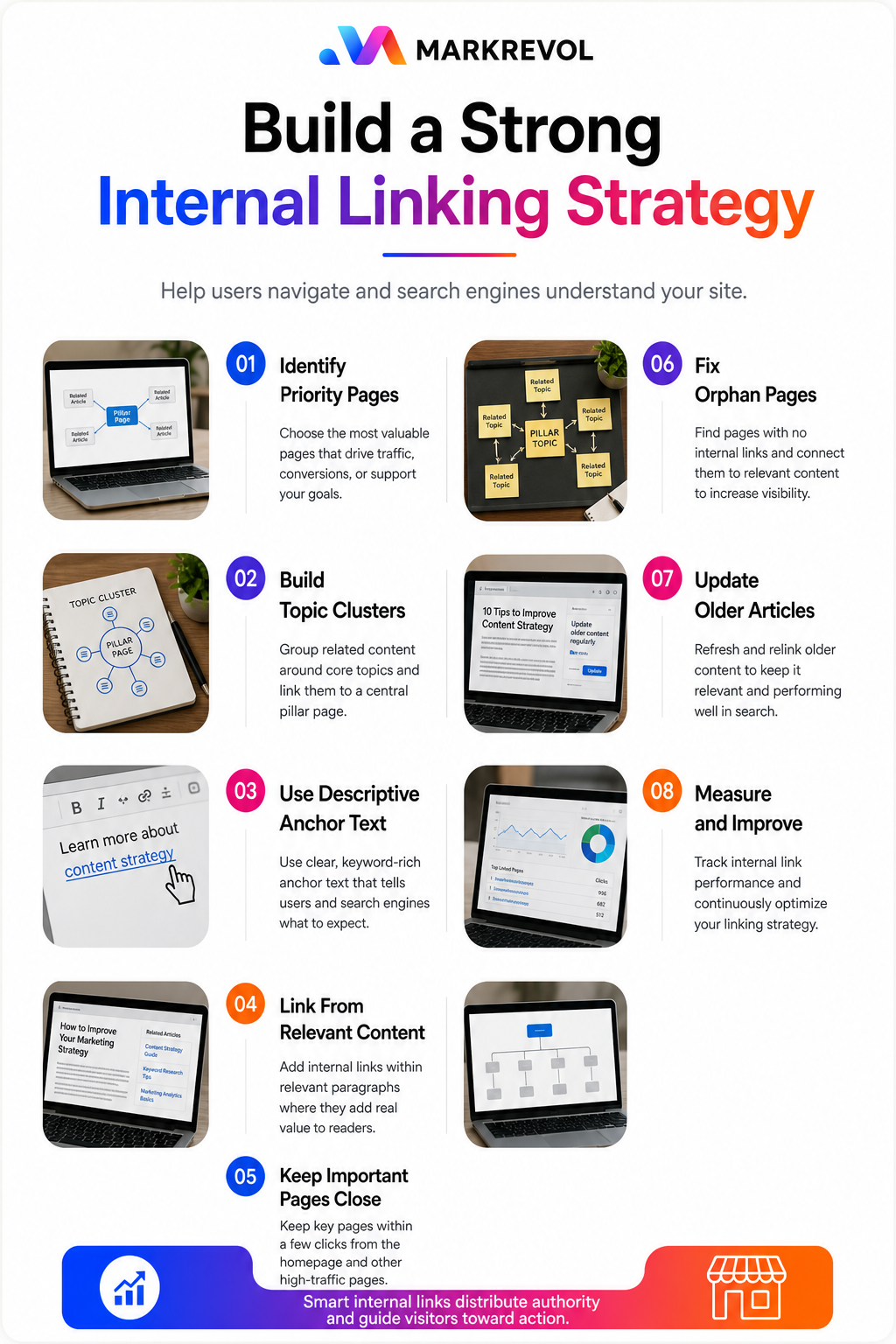

An internal linking strategy helps visitors find the next useful page and helps search engines understand how topics and business priorities connect. The strongest approach is based on site architecture and user journeys—not inserting the same keyword into every article.
Start with a hub-and-spoke map
Use a main services hub, individual service pages, and supporting articles. The hub introduces the offer, service pages target commercial intent, and articles answer the questions people ask before choosing a provider.
Prioritize revenue pages
Important service pages should receive contextual links from the homepage, service hub, relevant articles, and related services. Avoid leaving new landing pages dependent only on an XML sitemap.
Use natural anchor text
- Describe what the destination page provides.
- Vary wording according to the sentence.
- Avoid vague anchors when context matters.
- Do not repeat exact-match keywords unnaturally.
Audit links systematically
Identify orphan pages, broken links, redirecting links, overly deep pages, and content that receives many links while important commercial pages receive few. Update old articles whenever a new related service or guide launches.
A practical linking pattern
Homepage → services hub → service page → supporting article → related service → contact page. Every link should be useful even if search engines did not exist.
Frequently asked questions
How many internal links should a page contain?
There is no universal number. Add links where they help readers understand a term, compare an option, or take the next step.
Internal linking is included in MarkRevol’s on-page SEO services.