


SEO pricing in the United States varies because an audit, a local campaign, and a national growth program require very different amounts of research and implementation. Clutch’s 2026 pricing data reports that SEO agencies commonly charge $2,000–$20,000 per month, while many U.S. providers list hourly rates of $100–$149. Those figures are market benchmarks—not a quote for every business.
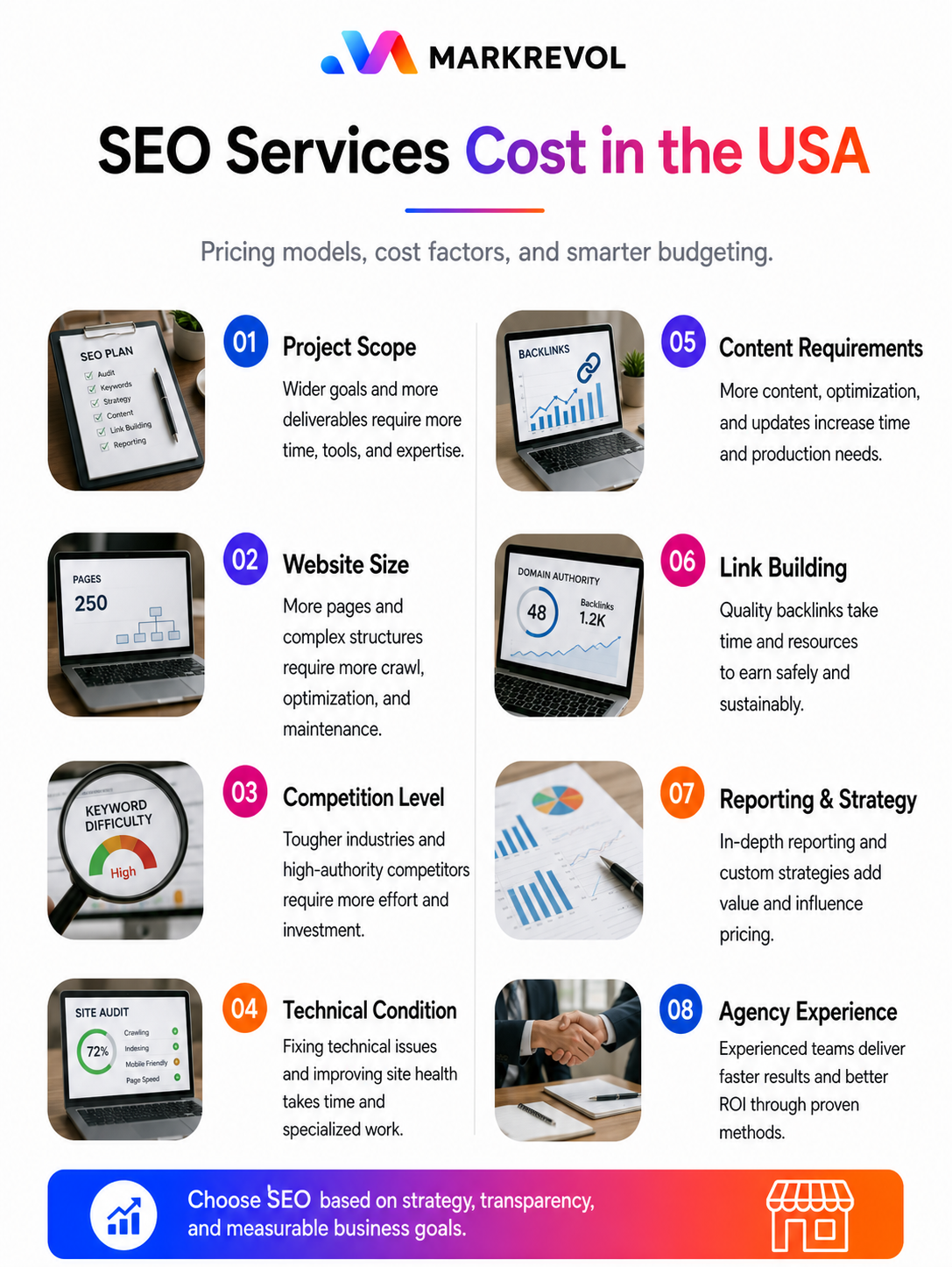
What determines the cost of SEO services?
The most important cost driver is scope. A small service business with one market, a clean website, and a focused offer needs a different plan from an ecommerce store with thousands of URLs or a company competing nationally.
- Website condition: indexing problems, slow templates, duplicate pages, and weak site architecture increase the initial workload.
- Competition: established competitors usually require deeper content, stronger authority, and longer execution.
- Market coverage: local, multi-location, national, and ecommerce campaigns have different requirements.
- Content needs: service pages, comparison content, case studies, and expert articles require research and editorial work.
- Implementation: an audit costs less than an engagement that also fixes the issues.
Common SEO pricing models
Monthly retainers
A retainer supports ongoing technical monitoring, content development, internal linking, reporting, and strategy adjustments. This model fits businesses that want sustained organic growth instead of a one-time report.
Project-based SEO
Project pricing works for a defined outcome such as a migration, a technical SEO audit, a new site structure, or optimization of a fixed group of service pages.
Hourly consulting
Hourly support can be useful when an internal marketing or development team needs specialist guidance. It is less predictable when the site requires extensive execution.
What should be included in an SEO proposal?
A useful proposal should connect work to business outcomes. It should clearly define the pages, markets, technical fixes, content deliverables, authority work, reporting cadence, responsibilities, and timeline. Avoid packages that promise rankings without explaining how the website will be improved.
- Baseline audit and measurement plan
- Keyword-to-page mapping
- Technical and on-page implementation
- Content and internal-linking roadmap
- Authority or digital PR plan where appropriate
- Reporting tied to qualified traffic, leads, and revenue signals
How should a business set its SEO budget?
Start with the value of a qualified customer, the number of markets you need to reach, and the problems already limiting the site. A reliable agency should prioritize the highest-impact work rather than forcing every business into the same package. MarkRevol’s digital marketing services are structured around the actual growth constraints found during discovery.
For a clearer comparison, review what monthly SEO services include, learn how to measure SEO ROI using leads and revenue, and use this guide to choose an SEO agency for a small business.
Questions to ask before hiring an SEO agency
- Will the agency implement recommendations or only provide a report?
- Which metrics will show business progress?
- Who owns the content, analytics, and accounts?
- How are technical issues prioritized?
- What work is included each month?
- How will the strategy change if the data does not support the original plan?
Frequently asked questions
Is cheap SEO a good option?
Low price alone does not make a service risky, but unclear deliverables, automated content, bulk links, and ranking guarantees are warning signs. Compare scope, implementation quality, transparency, and ownership—not price alone.
Can SEO be a one-time project?
A focused audit or migration can be project-based. Competitive growth normally needs ongoing work because websites, competitors, search results, and customer behavior continue to change.
How can I get an accurate quote?
An accurate quote requires reviewing the site, goals, target markets, current visibility, and available internal resources. Contact MarkRevol to discuss the scope before selecting a plan.