

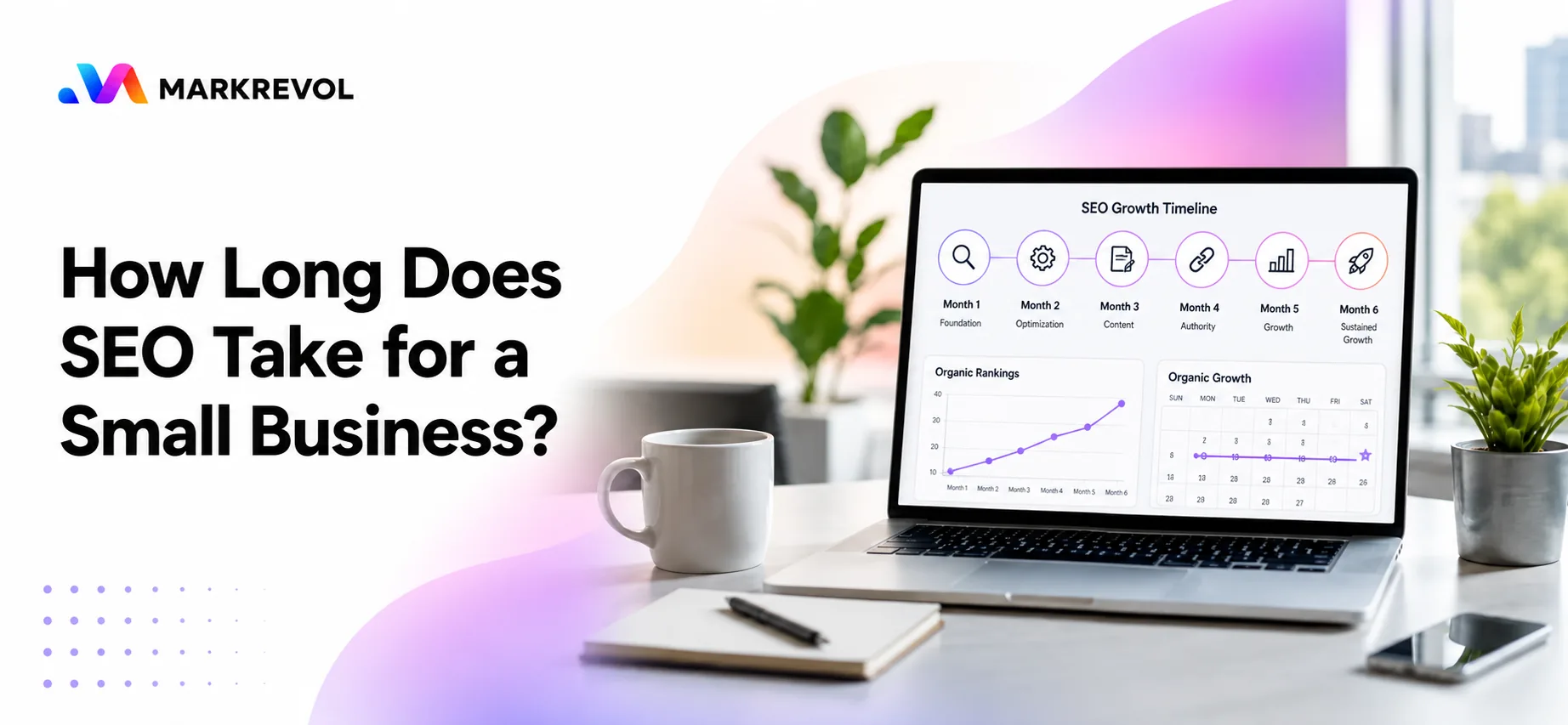
SEO for a small business usually takes months, not days, because search visibility depends on several moving parts. Google needs to discover and evaluate changes, competitors continue improving, and the business must build a stronger body of content and trust over time.
Many businesses can see early movement within the first few months, but meaningful lead growth often takes longer. The honest answer depends on your starting point, competition, market, resources, and how quickly improvements are implemented.
What happens during the first month?
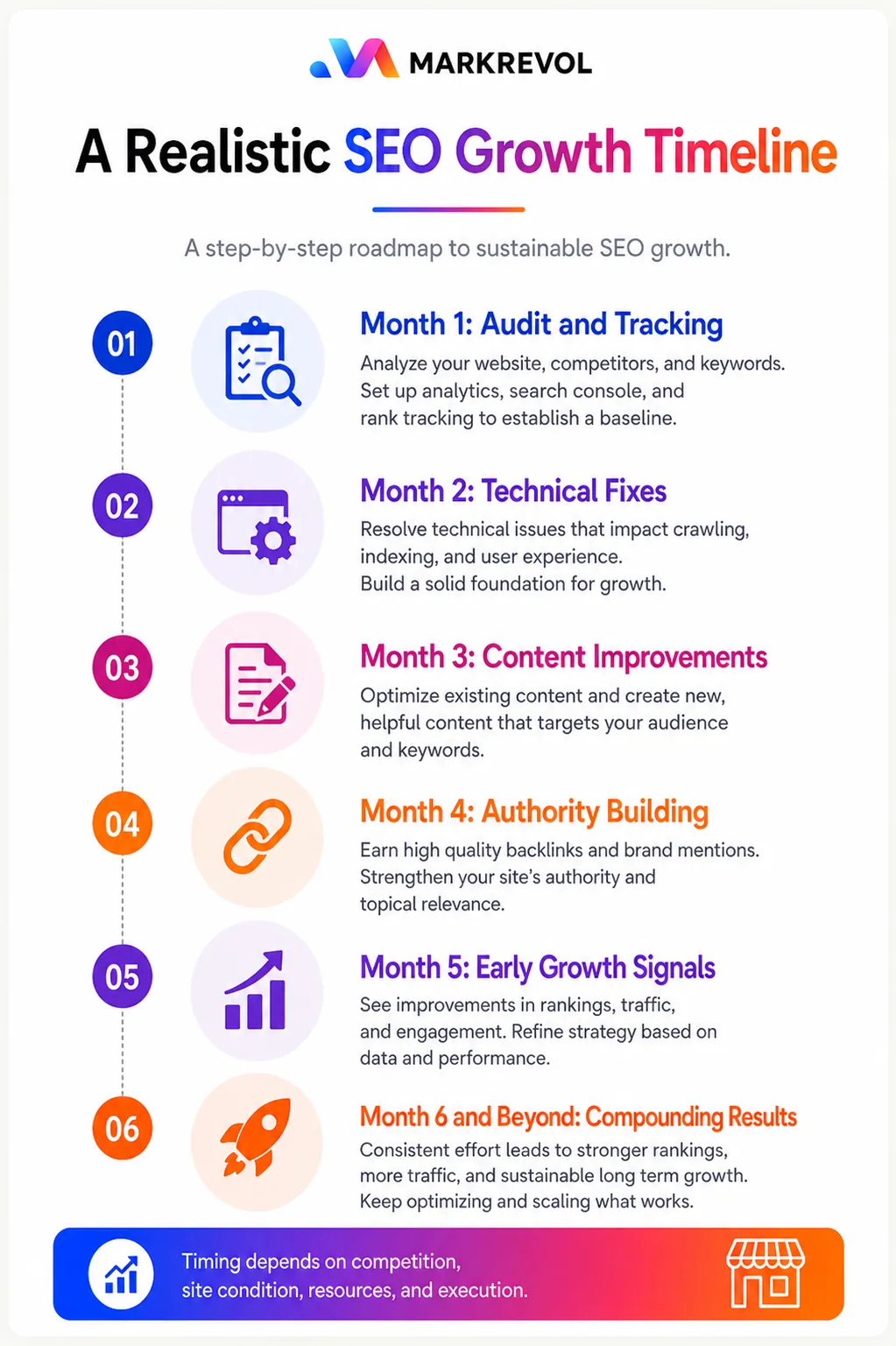
The first month should establish a reliable foundation. The team reviews analytics, Search Console, conversion tracking, technical health, existing rankings, priority services, competitors, and the sales journey. It then creates a roadmap that separates urgent fixes from longer term opportunities.
Some changes can be completed quickly, such as fixing a title, redirect, broken link, or tracking error. Other work requires development, stakeholder approval, research, writing, and design. A detailed technical SEO checklist helps reveal which foundation issues may delay progress.
What progress can appear in months two and three?
During this period, search engines may begin processing technical fixes, page improvements, internal links, and new content. You may notice better crawling, more priority pages indexed, ranking movement, and stronger impressions for relevant queries.
These signals matter, but they are not the same as predictable revenue. A page can move from a low position to the second results page without creating many visits. The agency should explain early indicators while keeping attention on qualified leads.
Why months four to six often matter
Consistent work starts to create a connected site rather than a collection of isolated edits. Helpful articles support service pages, internal links clarify relationships, and stronger pages may earn mentions or backlinks. Search engines also have more evidence about the site’s quality and topical focus.
This is often when a small business can judge whether the strategy is moving in the right direction. It is still possible for results to vary. Competitive industries, new domains, weak websites, and limited implementation can extend the timeline.
Five factors that change the SEO timeline
Your website’s current condition
A trusted site with useful pages has a different starting point from a new domain or a site with indexing, speed, duplication, or content quality problems. Foundational repairs may need to happen before growth work can perform well.
The strength of competitors
If established competitors have years of helpful content, brand recognition, reviews, and quality links, catching them requires more evidence and sustained effort. A focused niche may create faster opportunities than a broad national market.
The speed of implementation
An excellent plan cannot work while changes remain in an approval queue. Businesses that provide access, feedback, subject knowledge, and timely approvals give the campaign a better chance to build momentum.
Content and authority gaps
A site may need clearer service pages, useful comparison content, real proof, and stronger references from relevant websites. These assets take time to create well. Publishing rushed content only to increase volume can create more cleanup later.
Search intent and conversion quality
Targeting the wrong queries can produce traffic without business value. Good SEO maps topics to the buyer journey and improves the path from page visit to inquiry. Our guide comparing on page SEO and technical SEO shows why both visibility and page usefulness matter.
How to know whether SEO is on track
Look for a sequence of evidence: technical barriers are resolved, important pages are indexed, relevant impressions grow, rankings improve across a useful topic set, organic visits engage with the site, and qualified inquiries increase. A single keyword should not decide whether the whole campaign is succeeding.
MarkRevol’s technical SEO specialists can help identify whether crawl, indexing, performance, or architecture problems are slowing progress.
Frequently asked questions
Can SEO work in one month?
Important fixes can be completed in one month, and some sites may see early movement. One month is usually too short to judge the full business impact because search engines need time to process changes and competitive improvements need to accumulate.
How long does local SEO take?
Local SEO timing depends on the market, proximity, website strength, Google Business Profile quality, reviews, citations, and competition. Early profile and website improvements may appear quickly, while consistent visibility across valuable local searches can take several months.
Why is my SEO taking longer than expected?
Common causes include technical barriers, slow implementation, intense competition, weak content, poor links, a new domain, targeting overly broad keywords, or incomplete conversion tracking. Review completed work and leading indicators before changing direction.
Should I stop SEO if results are slow?
Do not continue blindly, but do not judge the strategy from one short period. Ask for a clear explanation of completed work, indexing, visibility, conversions, and obstacles. Adjust the plan when evidence shows that priorities or execution are weak.
Does more content make SEO faster?
More content only helps when it answers useful questions, supports priority services, and adds information the site needs. Thin or overlapping pages can dilute focus. Quality, relevance, structure, and implementation matter more than publishing volume alone.