

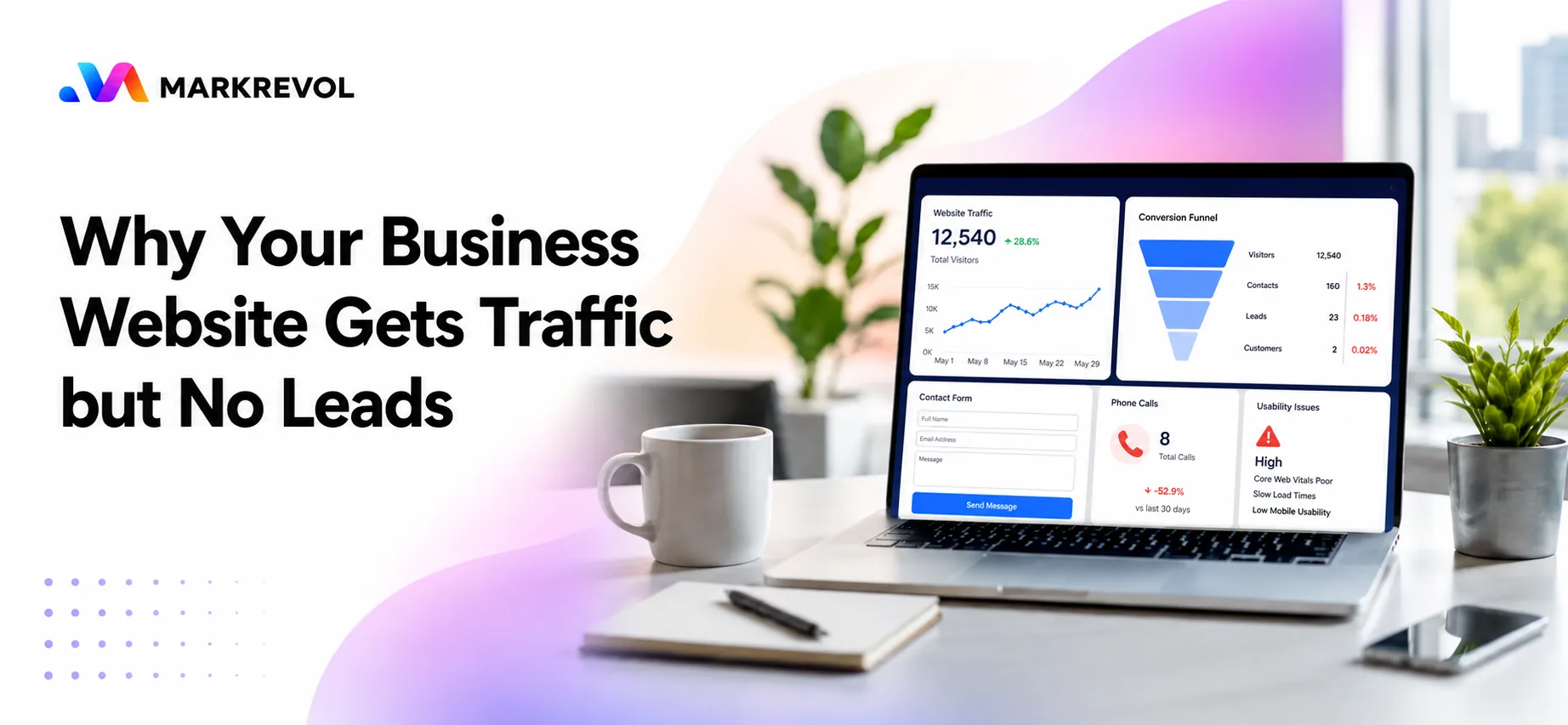
A business website can receive traffic without leads when the visitors, message, offer, and conversion path do not align. More sessions do not solve this problem by themselves. The site must attract the right intent, answer the visitor’s concerns, create trust, and make the next step easy.
The fastest way to diagnose the issue is to separate traffic quality from website conversion. This shows whether the problem begins before the visit or after it.
Check whether the traffic matches the business
Review the queries, sources, landing pages, locations, and devices behind the traffic. A blog can attract thousands of readers seeking general information while the service pages receive very few qualified visits. Social traffic may engage with an interesting post without any buying intent.
In Search Console, compare queries with the services you actually sell. In analytics, segment conversions by landing page and channel. Traffic is useful only when it serves a clear role in the customer journey.
Make the value proposition obvious
A visitor should quickly understand what you do, who you help, and why your offer is relevant. Generic headlines force people to search for meaning. Replace broad claims with a clear outcome and specific audience.
The first screen should also provide an appropriate next step. A visitor researching a complex service may want to view the process or proof before booking. Someone with an urgent need may want a visible phone number immediately.
Match each page to one main intent
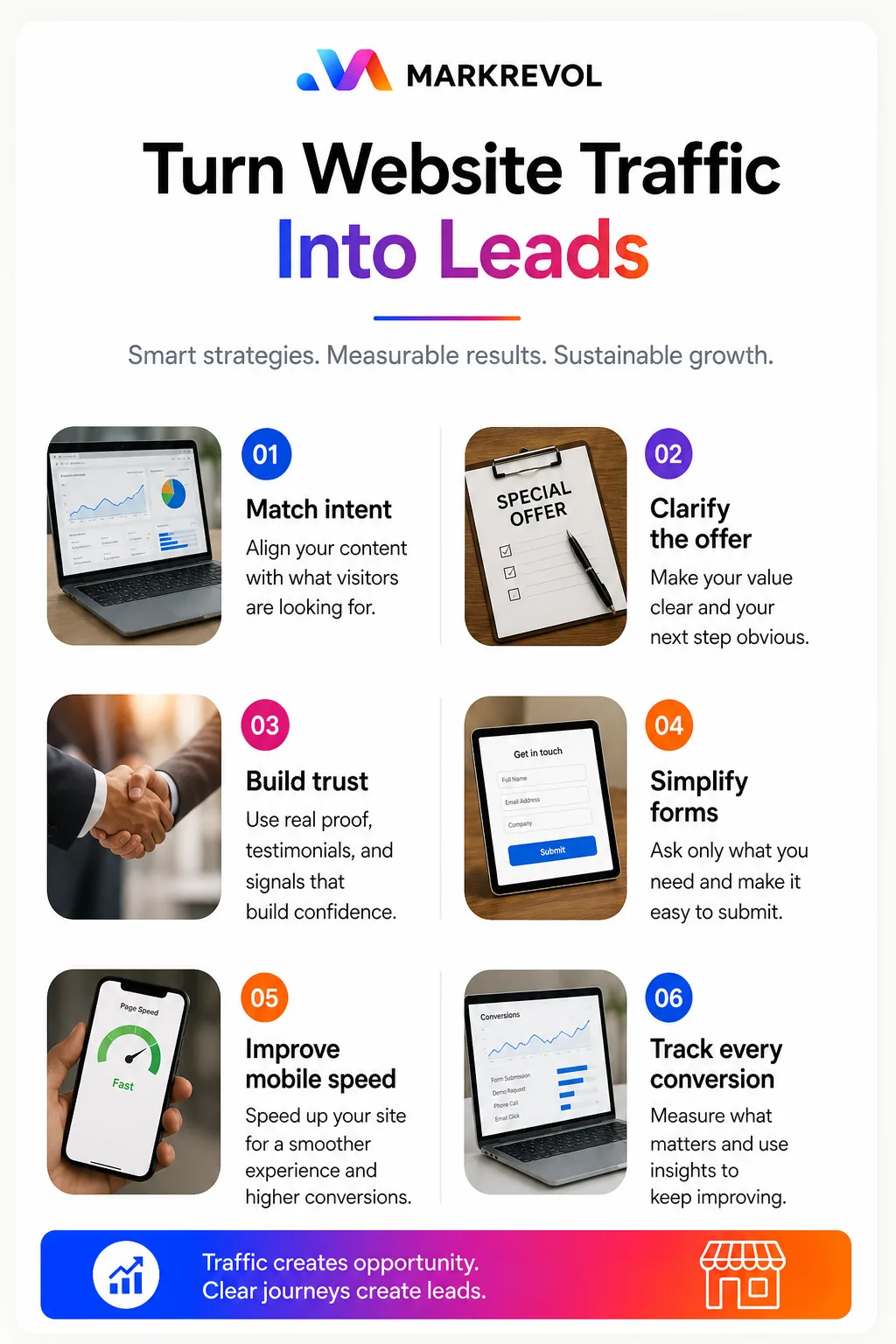
A page trying to explain every service to every visitor often converts poorly. Build focused service pages that answer the questions associated with one need. Keep the message consistent from the search result, ad, email, or social post through the landing page.
Contextual internal links can guide readers from educational content to a relevant service page. A strong internal linking strategy makes that movement natural rather than forcing a sales pitch into every paragraph.
Build trust before asking for contact
Visitors evaluate risk. Use genuine reviews, client examples, credentials, team information, transparent processes, policies, and clear contact details where appropriate. Avoid unsupported superlatives and stock claims that every competitor could make.
Trust also depends on consistency. An outdated design, broken element, insecure warning, or conflicting contact information can create doubt even when the service is strong.
Remove conversion friction
Ask only for the information needed at the first step. Long forms, unclear required fields, aggressive popups, and confusing error messages can stop qualified prospects. Provide a confirmation message or thank you page so visitors know the form worked.
Offer contact methods that fit the audience, such as phone, form, booking, chat, or email. Do not add every option without a response process. An unanswered chat box reduces trust.
Improve the mobile experience
Test pages on a real phone. Check load speed, text size, spacing, menus, forms, buttons, and horizontal overflow. Ensure phone links work and important calls to action remain visible without covering the content.
Technical problems can also limit both traffic quality and conversion. Our business website technical SEO checklist covers crawl, performance, mobile, and indexing issues worth reviewing.
Verify tracking before changing the site
Forms may be working while analytics fails to record them, or analytics may count button clicks that never become submissions. Test every conversion action from start to finish. Confirm the event, source, lead record, notification, and thank you experience.
Record lead quality and sales outcomes. Without that feedback, a page may appear successful because it creates many low value inquiries.
Use a focused improvement process
Start with high traffic pages that have weak conversion and clear commercial relevance. Review visitor intent, headline clarity, proof, page speed, calls to action, and forms. Make a meaningful change, then compare qualified outcomes over a reasonable period.
Do not copy a competitor’s layout without understanding its audience. Use evidence from your own searches, customers, sales conversations, and analytics. MarkRevol’s website design services combine user experience, search intent, and conversion planning.
The solution is not always more traffic. It is a clearer journey from the visitor’s problem to a credible next step.
Frequently asked questions
What is a good website conversion rate?
There is no universal rate because industries, offers, traffic sources, prices, and conversion definitions differ. Build a baseline for qualified conversions, then improve it while monitoring lead quality and revenue rather than chasing an unrelated benchmark.
Why does blog traffic not convert?
Blog visitors may have informational intent and may not be ready to buy. Use relevant internal links, helpful next steps, and content that supports the buyer journey. Do not force unrelated service promotions into an article.
Can a website get too much irrelevant traffic?
Yes. Broad topics, wrong keywords, referral spam, or poorly targeted campaigns can increase sessions without creating opportunities. Segment traffic by query, source, geography, landing page, and conversion quality to identify the mismatch.
Should every page have a contact form?
Every page should provide a sensible next step, but it does not always need a full form. The action should match intent. Educational pages may guide readers to a service, while high intent service pages can offer a form, call, or booking.
How do I find where visitors leave?
Use analytics funnels, landing page reports, form data, call records, recordings where consent permits, and mobile testing. Combine behavior data with the actual page message because a drop off number alone does not explain the visitor’s reason.